|
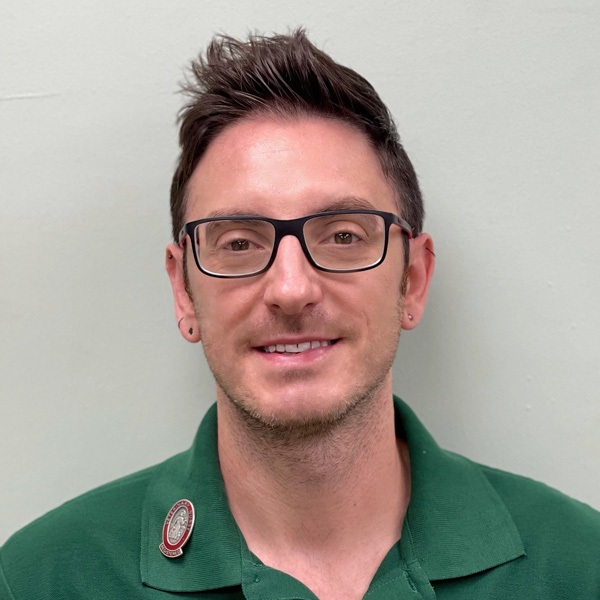
We are very fortunate to be able to introduce you to Jessica Rees who we are proud to welcome into our equine team.
Jess qualified from Edinburgh University in 2003 and went straight to the Three Counties Equine Hospital (Kearns & Rea) to take up a position as house surgeon. She then went on to become an assistant veterinary surgeon until 2007. During this time Jess was responsible for in-patient care, anaesthesia, neonatal intensive care, care of post-operative surgical cases and stud medicine.
In 2007 Jess moved to a first opinion equine practice in Yorkshire before moving back to the area and taking up our offer of a position at Woodlands!
Lameness evaluation, preventative medicine of the older equine patient and poor performance investigation are all areas of particular interest to Jess, as well as carrying out all routine procedures.
In her spare time Jess is a keen competitor in team chases, showing, show jumping and cross country on her 17.3hh ex-racehorse 'Ned'. She recently qualified for the RoR ex-racehorse performance national finals at the Hunter Show of GB held at Addington. She also enjoys walking her jack russell terrier 'Oscar'. Other interests include eating out and skiing.
We are very excited about having such a respected vet as part of our teaam and are confident that you will reap the benefits of her experience as part of our expanding practice.
Woodlands Equine Clinic Open
Woodlands Equine Clinic is situated at badgeworth Livery, Cold Pool Lane and any treatment carried out at the clinic does not incur a visit fee!
Click here for a map of the Equine Clinic.
We have also purchased a new state of the art high frequency portable Xray unit for equine work. This gives us more flexibility in our diagnostic approach to lower limb lameness (such as laminitis and navicular disease) as well as assessing foot balance.
Some of the work we can offer there is:
FACILITIES WE CAN OFFER TO OUR EQUINE PATIENTS:
- Health Checks in all equines, but especially useful in veterans or new horses
- Dental work using motorised power tools
- Diastema opening for horses that have diastema (gaps between their teeth leading to food trapping
- Vaccinations including health checks and microchipping
- Digital radiography including a portable machine useful for laminitics which are too lame to be transported
- Ultrasound scanning for assessment of limb soft tissue injuries
- Endoscopes for investigation of respiratory disease
- In-house laboratory for haematology and biochemistry blood samples and worm egg counts
- Lameness investigations
- 2 and 5 stage Vettings (Pre-purchase examinations)
EQUINE TEAM
Mike Daly, Jess Rees and Lindsay Brazil are our equine Veterinary Surgeons.
Mike is one of the partners at Woodlands, having qualified from Bristol in 1981. His expertise and reputation are widely recognised as an equine practitioner. He founded Woodlands in 1992.
Lindsay Brazil works part time for Woodlands, she previously worked at Peasebrook Equine Clinic. She is a keen rider when time allows with 3 young children!
Jess Rees has worked at Woodlands since 2008. She has previously worked at Three Counties Equine Hospital and in an Equine practice in Yorkshire. She has her own thoroughbred Ned and a Jack Russell terrier Oscar.
Ali Lloyd is our Equine nursing assistant. She has worked for Woodlands since 2000 and helps the equine Vets with all procedures and deals with equine insurance claims. She enjoys riding her horse Harry.
VACCINATION PROTOCOLS
A foal can start of its primary course of vaccinations from 5-6 months of age. Both influenza and tetanus vaccines are usually given as a combined vaccine but in some cases tetanus alone is sufficient. If you are unsure then please feel free to speak to one of our Vets. The first vaccination is also a good time to apply for a passport for the foal. There are different requirements for new passports depending on the breed society or passport issuing authority but the foal needs its identification drawing by a Vet and a microchip inserting. A first vaccine is given, followed by a second one 21-92 days later, followed by a third one 150-215 days later. Boosters are then given annually (less than 365 days later). If tetanus alone is given then a first and second vaccine are given 4-6 weeks apart, a third one a year later, and then boosters every other year from then on.
PRE-PURCHASE EXAMINATIONS
We are able to offer both 2 and 5 stage pre-purchase examinations (‘Vettings’). A 2 stage PPE is usually done for insurance purposes or for horses that are not able to be ridden for the vetting. It consists of a preliminary examination at rest and trotting up / flexion tests. A 5 stage PPE also includes strenuous exercise, a period of rest, and a second trot-up. If possible, a 5 stage PPE is preferable to a 2 stage and the insurance company that the horse is to be insured with should be consulted to check which they require. The cost of a 2 stage PPE is £87.84 Inc VAT, and a 5 stage is £165.91 Inc VAT. The visit charge will depend on where the horse is kept. We recommend taking a blood sample at each vetting at an additional cost. This sample is then stored for 6 months in case testing for any painkillers or sedatives is required at a further fee (depending on the drugs tested for).
REFERRALS
We have a good relationship with several local referral hospitals for any cases that require surgery or more complicated procedures with specialised equipment. Tim Brazil (Equine Medicine on the Move) offers an ambulatory medicine referral service for procedures such as gastroscopy, endoscopy or heart scans.
COMMON EMERGENCY SITUATIONS...
COLIC
 |
 |
|
Colic is a term given to abdominal pain. Horses commonly suffer from colic and the symptoms can vary in severity and include inappetance, rolling, pawing at the ground, lying down more than usual, biting at flanks, flank watching, tail swishing, sweating and general discomfort. It can be distressing to see a horse in pain but try not to panic! Most cases respond well to injections of painkillers, occasional ones need surgery at a referral clinic depending on the underlying reason for the colic. Call for Veterinary visit. Remove any sources of food. If safe to do so it can be helpful to walk the horse around, for example in a school, in case the horse tries to roll. If the horse is really painful then don’t risk personal injury, just wait for the Vet to arrive. Providing the horse is in a safe environment where it can’t get caught in fencing etc, rolling is unlikely to cause any further damage so don’t get injured trying to keep the horse on its feet. Monitor for any droppings while waiting for the Vet to arrive.
SEVERE WOUND / BLEEDING
Call for Vet visit. If it is possible to do so move the horse to a stable with good lighting to allow good inspection of the wound, while waiting for the Vet to arrive. If possible the wound can be cleaned with clean water or saline. A dry dressing can be useful to prevent further contamination. If the wound is bleeding profusely then apply a pressure bandage with plenty of padding to the area. Check the horse’s tetanus vaccination status. Don’t be tempted to put any topical creams or sprays on the wound until it has been examined.
EYE INJURY
Injuries to the eye can include skin and eyelid wounds, damage to the surface of the eyeball, or a painful closed eye. Call the Vet and if possible move to a stable to allow examination in light and dark. Don’t be tempted to put any medication in the eye until it has been examined by a Vet. It can be dangerous and damaging to use previously prescribed eye drops in another case as the drug may be more harmful.
WOUND NEAR TO A JOINT
Any wound that enters a synovial structure, from a small puncture wound to a large open wound is a very serious and emergency condition. All joints and tendon sheaths can be affected. Severe lameness is usually a feature once the wound is a few hours old. Diagnosis is based on clinical examination and sometimes taking a sample of joint fluid from the affected joint for analysis. If a septic joint or tendon sheath is diagnosed then surgical lavage is required at a referral centre. If you are in any doubt about whether a joint or tendon sheath is implicated in a wound then call for a Veterinary visit.
SEVERE LAMENESS
Most cases of severe lameness although alarming, turn out to be foot abscesses. However, other conditions could be causing the severe lameness, for example a fracture, infection, or synovial sepsis. Veterinary examination is required to differentiate these conditions.
PENETRATION INJURY TO THE HOOF
This is a potentially very serious condition if the nail or other foreign body has contacted any of the synovial structures within the hoof - the coffin joint, flexor tendon sheath or navicular bursa. The middle 1/3 of the frog is the most dangerous area for a penetration to occur. Even if no synovial structures are implicated, a nasty foot abscess can result from a penetration. Call the Vet, and take careful note of the size of nail, point of entry, direction and depth of penetration. Keep the nail to show the Vet. In some cases it may be better to leave the nail in place and apply a padded hoof bandage prior to the Vets arrival. Keep the foot clean and covered while waiting for the Vet.
CASE STUDIES
BOB
Bob presented with a foul smelling nasal discharge from the left nostril. Examination of his mouth revealed a fracture of the 4th upper cheek tooth on that side. The fracture in the tooth was allowing food material to track up through the tooth into his maxillary sinus causing a sinusitis and nasal discharge. Head X-rays showed fluid lines in the sinus indicating the infection present and the fractured tooth could be seen. Under standing sedation the tooth was removed and the sinus flushed for a week through an indwelling catheter placed in Bob’s forehead into the sinus. Bob has made a remarkable recovery and seems to be back to normal! His teeth need regular check-ups to ensure that the opposing tooth does not become overgrown as there is no tooth to grind on.
CHARLIE
Charlie is a 20 year old gelding that recently presented to Woodlands Veterinary Clinic with behavioural changes, for example biting when being groomed, tacked up or mounted, tail swishing during exercise and a reluctance to canter. Pain was evident around the muscles under the saddle region. The saddle fit had already been checked by a qualified saddle fitter. Radiographs (X Rays) of Charlie’s back were taken which revealed he has kissing spines (impinging dorsal spinous processes) from T13-T16 (thoracic vertebrae). This region has been medicated with long acting local anaesthetic and anti-inflammatory drugs (corticosteroids). Physiotherapy and work in a pessoa is to be carried out to improve the outline and muscle development. So far Charlie has shown a good response to the back medication and is much less sore.
Kissing spines is a painful condition where the dorsal spinous process of one or more vertebrae touches and rubs on the one next to it causing pain and irritation. Clinical signs include pain responses like Charlie’s or reluctance to jump and poor performance. Conservative treatment may include back medication, physiotherapy, different schooling techniques to assist in muscle development and analgesic drugs. More advanced surgical treatment consists of removing the affected DSP(s) so no interference is possible.
|